
What Are Alebrijes? Meaning, Origins & Oaxaca Guide
Alebrijes are colorful Mexican folk-art creatures made from imagined animal forms, bright patterns, and symbolic details. The original papier-mache alebrijes began in Mexico City with Pedro Linares, while Oaxaca made the carved copal-wood versions famous in artisan villages such as Arrazola and San Martin Tilcajete.
If you are trying to understand what alebrijes are, what their colors mean, whether they are really spirit animals, and where travelers can see authentic pieces in Mexico, start here before you buy a souvenir or plan an Oaxaca workshop visit.
| Alebrije question | Quick answer |
|---|---|
| What are they? | Fantasy animal figures from Mexican folk art, usually painted in intense colors and patterns. |
| Where did they start? | Pedro Linares created the original papier-mache alebrijes in Mexico City. |
| Why is Oaxaca famous? | Oaxaca artisans turned alebrijes into carved copal-wood figures, especially around Arrazola and nearby villages. |
| Where can travelers see them? | Look for them in Oaxaca workshops, Mexico City folk-art museums, markets, and October alebrije parades. |
These beings have reached many parts of the world, causing fascination; even collectors are already bidding for unique pieces.
Alebrijes and their meaning
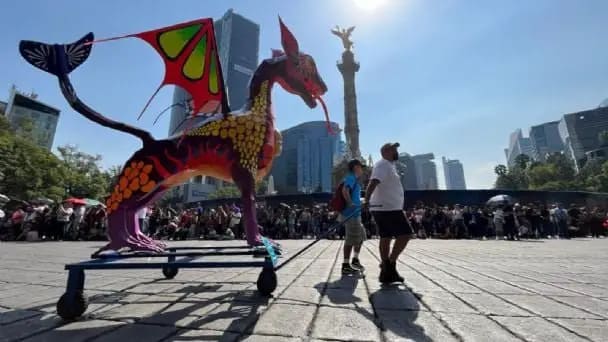
Alebrijes are imaginary beings that are composed of different animal parts.
If you have visited Mexico, and among your souvenirs, you carry some handicrafts in the shape of a cat with wings or a dog with six legs painted in many colors, now you know what they are.
Alebrijes are also called or known as Nahuatkzosquit.
Some are made of wood or reed, and the technique is highly meticulous, reaching true works of art.
Where are Alebrijes from?
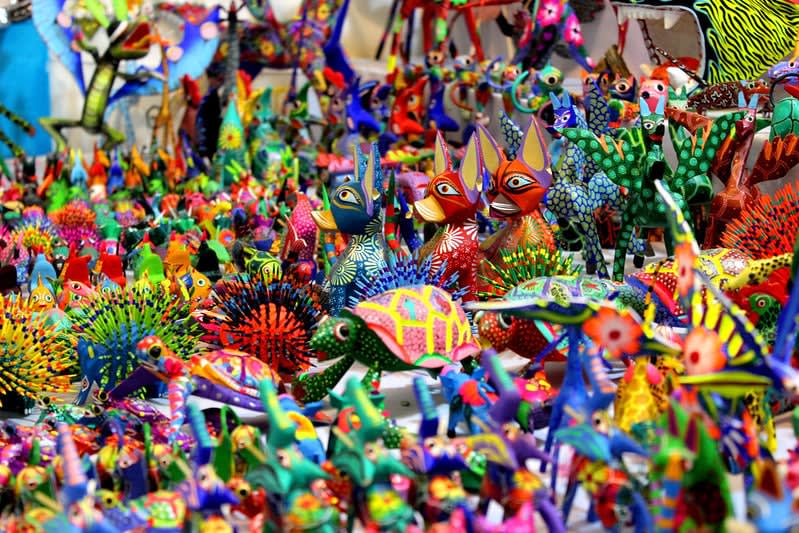
As I mentioned, these colorful friends were born in Mexico City, but the best ones are from Oaxaca because they make them with copal wood.
Pedro Linares Lopez, a cardboard craftsman from Mexico City, created these crafts.
At that time, he was going through an economic crisis in his trade.
He was 30 years old when he contracted a disease that was taking him to the brink of death because he did not have enough money for healthcare.
But one night, while his relatives were waiting for the worst, this artisan had a deep sleep, so they thought he had died.
When he woke up, he saw his sisters and relatives praying around him.
You may want to read: Oaxaca City: The Very Best Things to Do and Visit
Pedro dreamed that night that he was in a forest full of trees, rocks, clouds, and animal noises.
He didn’t feel any pain, and when he got up to walk, he began to see strange creatures he could not recognize.
For this were a donkey with wings, a rooster with bull horns, and a dog with the body of a lion, among others, which shouted “alebrijes!”
After this, Mr. Pedro began to give life to these beings by applying his cardboard techniques, calling them alebrijes as they were called in his dream.
The first figures he made were terrifying because nobody wanted to buy them.
Diego Rivera and Frida Kahlo were the first to acquire these famous Mexican alebrijes.
How can I make Alebrijes?
Now, I will tell you exactly how you can make alebrijes in your home in just four steps!
**Please note that the following video just gives you an idea. However, feel free to use whatever materials you need and work at your own pace.
Materials needed
- Newspaper
- Paper mache
- Paste or white liquid glue
- Flat pliers
- Adhesive tape
- Scissors
- Pencil
- 1mm galvanized wire
- Cardboard
- Plaster
- Five popsicle sticks
- Brush
- Color paints
Instructions
- Cut the newspaper into strips and small pieces to trace your figure
- Now make the frame or shell of your figure. The structure will be important because it is the base, with the popsicle sticks and the wires helping you with the adhesive tape.
- Then, you will begin to spread paste or glue on the newspaper to stick on the structure, and so on, until it is well formed.
- Once your alebrije is firm, you can paint it and/or coat it with paper mache. The colors are to your liking.
What is the meaning of the colors?
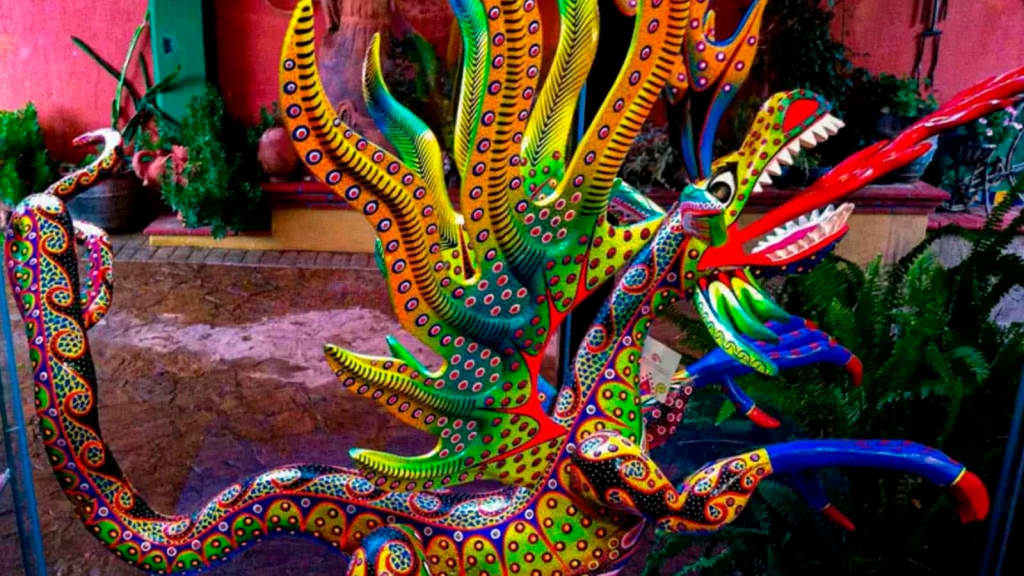
Now that you know what an alebrije is and how you can make your own, you must know the meaning of its colors, such as green, pink, orange, yellow, blue, and brown. Take note!
- Green: This is the meaning of nature
- Pink: Love and affection
- Orange: Freedom from negative things and thoughts
- Yellow: This color symbolizes luxury (gold), the intellectual part, and the expression of our feelings
- Blue: Relaxation
- Brown: This color symbolizes the earth and reminds us to look after our planet
Where to see Alebrijes in Mexico
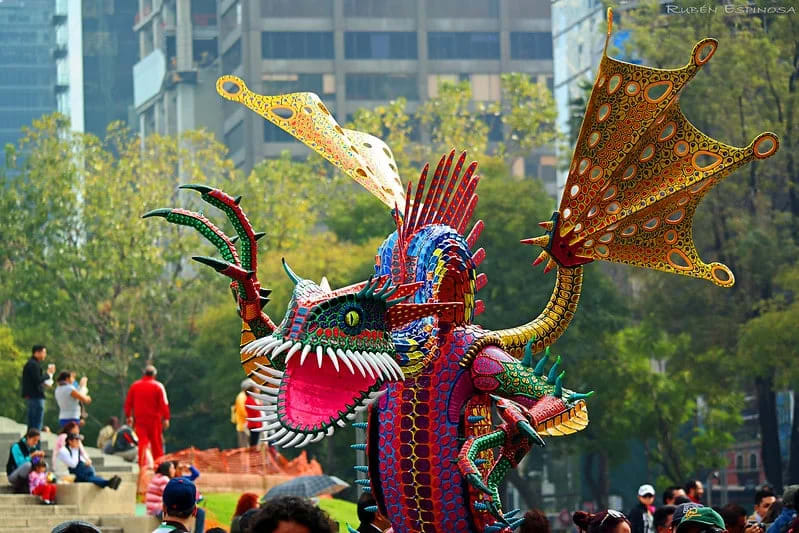
In Mexico City, you can see these incredible handicrafts in the Museum of Popular Art, where they exhibit samples up to 4 meters tall.
The parade takes place at night during October, illuminating the alebrijes with led light.
In the Museum of Popular Art, besides appreciating these 4-meter crafts, you can also see much more art.
San Antonio Arrazola, Oaxaca: Home of the best Alebrijes
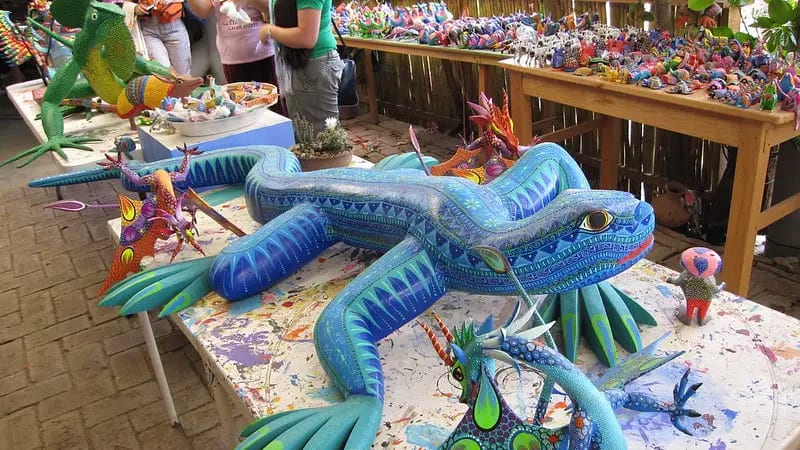
San Antonio Arrazola is 10 km from Oaxaca City. Commonly known as “Arrazola,” is famous for the finest manufacture of alebrijes.
The local artisans use different types of paper or wood carved and painted with bright and vibrant colors, represented by jaguars, tigers, mermaids, cats, and nahuales (Oaxaca’s native Indians).
Although they can be elaborated with various techniques today, this community stands out for using wood carving, a knowledge transmitted from generation to generation.